Lagos has taken its biggest step yet toward electric public transport. On 10 November 2026, Oando Clean Energy Limited (OCEL) and the Lagos Metropolitan Area Transport Authority (LAMATA) formally launched the full deployment of electric mass transit buses at LAMATA Place, moving beyond a two-bus pilot that has been running since May 2023. A day earlier, LAMATA shared footage of 11 new Yutong electric buses delivered for the scheme, which Oando describes as the first batch of 50 planned for Lagos, with a long-term goal of 552 fully electric buses in the state.
For the millions of Lagosians who ride BRT and LAMATA-franchised buses every day, and for anyone watching whether electric vehicles can really work on Nigerian roads, this rollout matters. Below, we break down what has actually been announced, what the two-year pilot data shows, what it could mean for fares and diesel costs, and the honest gaps that still need answers.
What Was Announced: The Key Facts
Here is what has been confirmed so far, according to statements from LAMATA, Oando Clean Energy and the partners at the launch, as reported by Nairametrics and ThisDay:
- 11 new electric buses delivered to LAMATA, described by Oando as the first batch of 50 for Lagos. The remaining 39 are to follow, though no delivery dates have been published.
- Total Oando e-buses in Lagos: 13 when the two pilot buses deployed in May 2023 are included.
- Long-term target: 552 electric buses in Lagos State, according to Hadiza Adukonu of Oando Clean Energy.
- Bus maker: Yutong, the Chinese bus manufacturer, through Yutong West Africa.
- Financier: the Bank of Industry (BOI) is backing the investment. The amount and terms have not been disclosed.
- Service start: the new buses are expected to begin operating in Q4 2026, with LAMATA running them on behalf of the Lagos State Government.
Oando also says it has secured the licence required for local vehicle assembly and plans to build a wider e-mobility ecosystem covering charging infrastructure, after-sales service, technician training and spare-parts supply. Yutong, for its part, says it will support charging, after-sales, mechanic training and parts.
The Pilot Numbers: Two Buses, Over Two Years
The strongest argument for this rollout is the data from the proof-of-concept phase. According to the figures shared by Oando and LAMATA, the two pilot electric buses that started in May 2023 have recorded:
- About 788,000 passengers carried
- About 433,000 km covered
- About 216,000 litres of diesel avoided
- About 584,000 kWh of electricity consumed, with roughly 192,000 kWh regenerated through braking
- More than 212,000 passenger journeys in the first nine months of 2026 alone, at 73% average capacity utilisation
- Close to zero downtime, according to Oando
That last point is important. The biggest fear about EVs in Nigeria has always been reliability: heat, flooding, rough roads, unstable power and scarce technicians. Two buses is a small sample, but two-plus years of near-continuous service on Lagos roads is real-world evidence, not a brochure claim. LAMATA’s managing director, Abimbola Akinajo, said the full rollout drew directly on that operating data.
What the diesel savings could be worth in Naira
Lagos depot prices for diesel (AGO) averaged about ₦1,688 per litre on 12 November 2026, according to depot price reports. Using that figure purely as an illustration, 216,000 litres of avoided diesel would be worth roughly ₦365 million at today’s depot price. Diesel prices have swung widely since 2023, so the actual savings over the pilot period would differ, and electricity is not free either. But the scale gives a sense of why operators are paying attention: two buses avoiding that much fuel suggests a single diesel bus on a busy Lagos route burns a very large fuel bill every year.
Put another way, the pilot figures imply the electric buses displaced roughly half a litre of diesel for every kilometre driven. For a Lagos bus operator, fuel is usually the single biggest running cost, and that is exactly the cost electricity is supposed to cut.
Bus Specs: What Riders Will Get
The new Yutong buses share the specification of the pilot vehicles, according to the launch details:
- Capacity: up to 79 passengers (39 seated, 40 standing)
- Comfort: air conditioning and onboard Wi-Fi
- Safety: 360-degree cameras plus additional security cameras
- Accessibility: wheelchair access and priority seating for elderly passengers
Battery size, range per charge and charging time for the new batch have not been published. Routes, charging depot locations and fares have also not been announced yet, so treat any figures you see on social media with caution until LAMATA confirms them.
Why Lagos Is Doing This Now
This is not a one-off. LAMATA’s policy restricting new buses to compressed natural gas (CNG) or electric power took effect at the start of 2026, and existing diesel buses are to be progressively replaced with cleaner options. Lagos State’s transport policy targets 52% of BRT buses running on clean energy by 2050, and the state’s broader goal is net-zero emissions by 2050, as Transport Commissioner Oluwaseun Osiyemi reiterated at the launch.
In other words, the future Lagos bus fleet is set to be a mix of CNG and electric. If you have been following our coverage of CNG conversion costs in Nigeria, this is the same shift happening at fleet scale. CNG buses are cheaper to buy and can refuel quickly at gas stations, while electric buses have lower running costs and fewer moving parts but need charging depots and reliable power.
Electric vs CNG vs Diesel Buses: How They Compare
Here is a simple, qualitative comparison for the Lagos context. Exact costs depend on fuel prices, electricity tariffs and financing terms, which change often.
- Diesel buses: lowest upfront cost and the most familiar to mechanics, but fuel is expensive and volatile, and they produce the most noise and tailpipe pollution. New diesel buses are no longer allowed into the LAMATA fleet under the 2026 policy.
- CNG buses: cheaper fuel than diesel and quick refuelling, supported by the federal CNG push. Downsides are limited refuelling stations outside key corridors and the need for proper cylinder safety checks.
- Electric buses: the lowest energy cost per kilometre, regenerative braking, near-silent operation and no tailpipe emissions. The trade-offs are high purchase prices, dependence on charging depots and grid or backup power, and a smaller pool of trained technicians.
What It Could Mean for Lagos Commuters
Fares
No fare change has been announced. Electric buses could, in theory, help keep fares steadier because their energy cost does not move with diesel prices. But fares in Lagos are set by policy and also have to cover the cost of buying the buses and building chargers. Do not expect immediate fare cuts; the realistic hope is more stable fares over time.
Comfort and reliability
Air conditioning, Wi-Fi and security cameras are a real upgrade on many older buses. The pilot’s 73% average load factor in 2026 suggests riders are already using the electric buses heavily where they run.
Air and noise
LAMATA expects lower emissions, air pollution and noise along major corridors. For people who live and work beside busy bus routes, quieter buses with no diesel fumes are a tangible quality-of-life gain.
What It Means for Private EV Owners and Buyers
Bus fleets often lead infrastructure. If Oando and Yutong build charging depots, train technicians and stock spare parts in Lagos, that skills base can spill over into the wider EV market. Today, the shortage of chargers and technicians is one of the biggest reasons people hesitate to buy an electric car in Nigeria, as we covered in our look at whether the grid can cope with EV charging.
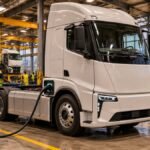
It also adds to a growing list of large-vehicle electrification projects in the country, alongside developments like the Dangote electric truck. Heavy vehicles that run fixed routes and return to a depot every night are the easiest place to prove EVs work in Nigeria, and the lessons learned there will shape what private buyers can expect.
That said, depot chargers built for buses are usually not open to the public. If you are thinking about buying an EV for personal use in Lagos, Abuja or Port Harcourt, plan around home charging, solar backup and the public stations available today, not future bus infrastructure.
The Honest Drawbacks and Open Questions
- Small numbers so far: 13 Oando electric buses is a long way from 552, and no timeline has been given for the remaining 39 in the first batch of 50, let alone the full target.
- Undisclosed costs: the investment size and BOI financing terms have not been made public, so it is hard to judge the economics independently.
- Power supply: charging dozens of buses needs stable, large-scale electricity. How the depots will be powered, and what backup they will use, has not been detailed.
- Routes and fares unknown: commuters still do not know where the new buses will run or what they will cost to ride.
- Flooding and heat: the pilot has performed well, but scaling up means more exposure to Lagos rainy-season flooding, and battery health in high heat over many years is still being proven locally.
Key Takeaways
Lagos electric buses are moving from pilot to real deployment: 11 new Yutong e-buses delivered, 50 planned in the first phase and a 552-bus long-term target. The two pilot buses carried about 788,000 passengers over 433,000 km and avoided about 216,000 litres of diesel with near-zero downtime. Routes, fares and the full timeline are still to be announced.
FAQ
How many electric buses does Lagos have now?
Oando says it has delivered 13 electric buses for LAMATA so far: 2 pilot buses from May 2023 and 11 new ones delivered in November 2026.
When will the new electric buses start carrying passengers?
The partners say the new buses are expected to start operations in Q4 2026. Watch LAMATA’s official announcements for exact routes and dates.
Will electric buses make transport fares cheaper in Lagos?
No fare change has been announced. Lower energy costs could help keep fares more stable in the long run, but there is no guarantee of a cut.
Who makes the Lagos electric buses?
The buses are built by Yutong, a Chinese bus manufacturer, supplied through Yutong West Africa, with Oando Clean Energy as the deployment partner and the Bank of Industry as financier.
Can private EV owners use the bus charging depots?
Nothing announced so far suggests public access. Depot chargers for bus fleets are typically private, so private EV owners should not count on them.
Disclaimer: Vehicle prices, fuel prices, import duties and specs change frequently in Nigeria. Always confirm current figures with the dealer or official source before buying. Figures in this article are based on statements from LAMATA, Oando Clean Energy and partners, as reported by Nairametrics and ThisDay in November 2026, and on Lagos depot price reports.