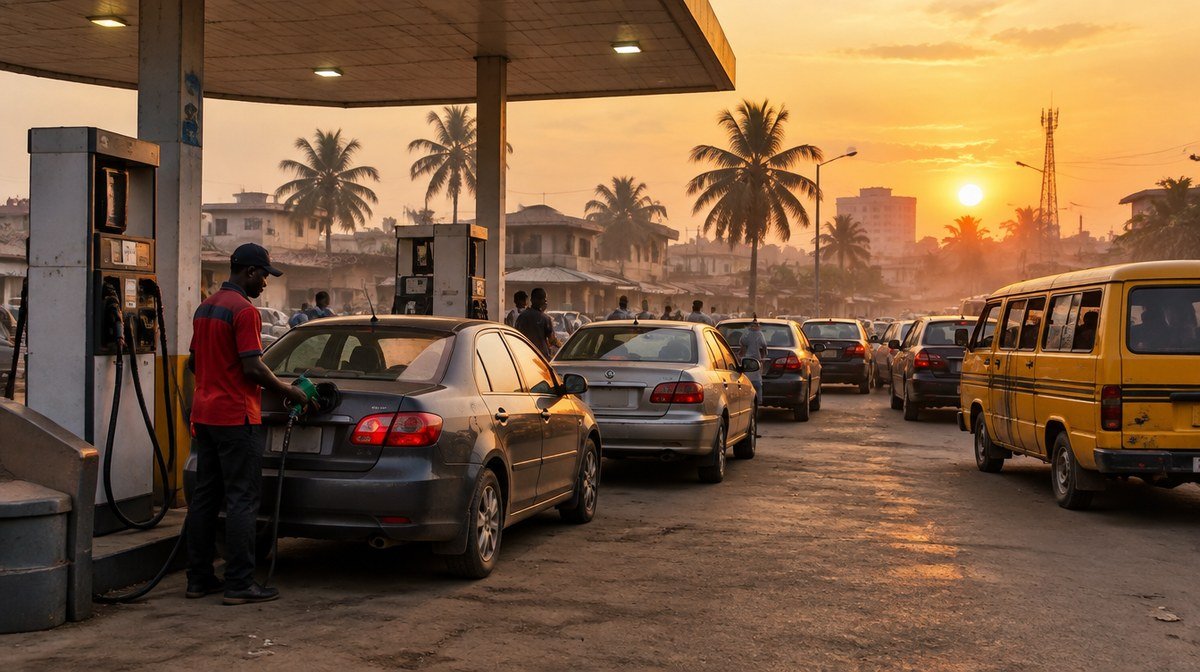
Petrol pump prices in Nigeria have climbed again. After the Dangote Petroleum Refinery raised its gantry (wholesale) price from N1,265 to N1,350 per litre with effect from 12 September 2026, filling stations moved quickly. Reports from Lagos put pump prices at around N1,395 per litre at MRS outlets, up from N1,310, while outlets in Abuja were quoted between N1,395 and N1,430 depending on the station.
That makes this the fourth increase since 21 August. Over those 22 days the refinery gate price has risen by roughly N185 per litre — about 15.9 per cent. The move is being attributed to crude oil trading above $104 a barrel amid US–Iran tensions affecting supply routes through the Strait of Hormuz.
For the average Nigerian motorist, the headline number matters far less than one question: what does this actually do to your monthly fuel bill? Below is the arithmetic, plus where the pain is heaviest and what genuinely reduces it.
What Petrol Actually Costs Across Nigeria Right Now
There is no single national pump price. Logistics, state taxes and how far a station sits from a depot all move the figure. Based on reported prices in mid-September 2026:
- Dangote gantry (wholesale) price: N1,350 per litre
- Lagos pump prices: around N1,395 per litre at MRS outlets
- Abuja pump prices: roughly N1,395 to N1,430, with some Mobil outlets reported at N1,400
- NNPC retail range nationwide: reported from about N1,235 per litre in Enugu at the low end to N1,395 in Yobe at the high end
Some stations were reported to be still selling older stock at lower prices in the days immediately after the increase, which is normal — the pass-through usually takes several days to complete. If you find a station still at the old rate, that is a short window, not a new baseline.
Fuel Cost Per Kilometre: The Numbers That Matter
The useful way to think about petrol price in Nigeria is cost per kilometre, not cost per litre. The calculations below use a pump price of N1,395 per litre and widely quoted real-world consumption figures for cars common on Nigerian roads. These are our own calculations, and your actual consumption will vary with traffic, engine condition, tyre pressure and how heavy your right foot is.
Cost per kilometre at N1,395/litre
- Toyota Corolla Hybrid (~4.0 L/100km): about N56 per km
- Suzuki Swift (~4.9 L/100km): about N68 per km
- Mitsubishi Mirage (~5.3 L/100km): about N74 per km
- Toyota Yaris (~5.9 L/100km): about N82 per km
- Toyota Corolla, petrol (~8 L/100km): about N112 per km
- Toyota Camry (~9 L/100km): about N126 per km
Now apply that to a realistic Lagos or Abuja commute. Someone doing 40km a day, five days a week, plus weekend running, covers roughly 1,000km a month:
- Corolla Hybrid: roughly N56,000 a month in fuel
- Suzuki Swift: roughly N68,000 a month
- Toyota Yaris: roughly N82,000 a month
- Toyota Corolla (petrol): roughly N112,000 a month
- Toyota Camry: roughly N126,000 a month
The gap between a Camry and a Swift on the same 1,000km is close to N58,000 every single month — around N700,000 a year. That is the real argument for fuel efficient cars in Nigeria, and it gets stronger every time the pump price moves up.
What This Latest Increase Alone Added
Take the Lagos move from about N1,310 to N1,395 per litre — an N85 jump. On 1,000km a month:
- A Corolla burning 80 litres pays about N6,800 more per month
- A Camry burning 90 litres pays about N7,650 more per month
- A Swift burning 49 litres pays about N4,200 more per month
Measured against the late-August level, the cumulative damage over the last few weeks is considerably larger — roughly double those figures for most drivers.
Who Feels It Hardest
Petrol price changes do not land evenly.
Commercial drivers and dispatch riders
If your vehicle is your income, fuel is a direct cut from earnings rather than a household expense. Danfo operators, ride-hailing drivers and dispatch riders cannot easily cut mileage — mileage is the job. The usual response is a transport fare adjustment, but fares lag pump prices by days or weeks, and the operator absorbs the gap in the meantime.
High-mileage private drivers
Anyone commuting from the mainland to the island daily, or from Nasarawa into Abuja, is running well above 1,000km a month. At 2,000km, every one of the monthly figures above doubles.
Large-engine SUV owners
A V6 SUV doing 13–15 L/100km in Lagos traffic is looking at roughly N180–N210 per kilometre at current prices. These are the vehicles most likely to be quietly parked and replaced with something smaller when prices spike.
What Actually Reduces Your Fuel Bill
Most “fuel saving tips” lists are padding. These are the levers that move real money:
- Right-size the car. This is the single biggest lever. Moving from a 2.5-litre saloon to a 1.5-litre hatchback can cut your fuel spend by a third or more. Nothing else comes close.
- Check tyre pressure fortnightly. Underinflated tyres are extremely common on Nigerian roads and quietly add several per cent to consumption, plus they wear out faster.
- Fix the air filter and spark plugs. A clogged filter and worn plugs are cheap to correct and both directly raise consumption.
- Cut idling. Sitting in traffic with the engine and air conditioning running burns fuel at zero kilometres per litre. On a long standstill, switching off genuinely helps.
- Consolidate trips. A cold engine consumes noticeably more. Three short separate trips cost more than one combined run of the same total distance.
- Consider CNG if your mileage is high. Compressed natural gas has a materially lower cost per kilometre than petrol, which is why conversion interest rises every time pump prices do. It requires an upfront conversion cost and access to a refilling station, so it makes sense mainly for high-mileage and commercial vehicles.
Is This the Moment to Switch to an EV or CNG?
Every petrol price spike pushes more Nigerians to ask this. The honest answer depends on your mileage and your access to infrastructure.
CNG is the more practical near-term option for most people, particularly commercial operators, because conversion works on many existing petrol vehicles and the running-cost saving per kilometre is substantial. The constraints are the upfront conversion cost, the need for a properly certified installer, and refilling station coverage that is still concentrated in a handful of corridors.
Electric vehicles remove the petrol bill entirely, but they shift your exposure to electricity supply and charging access. With grid reliability what it is in much of the country, many EV owners end up depending on solar or inverter setups, which adds significant upfront cost. EVs make the strongest case for predictable urban mileage where home charging is genuinely available.
For a low-mileage driver doing 500km a month, neither switch pays back quickly. For someone doing 3,000km a month commercially, the maths changes sharply.
Key Takeaways
The essentials in one place:
- Dangote’s gantry price rose to N1,350 per litre on 12 September 2026, the fourth increase since 21 August — roughly N185, or 15.9 per cent, in 22 days.
- Pump prices now sit at roughly N1,395 in Lagos, with Abuja reported between N1,395 and N1,430, and NNPC outlets ranging from about N1,235 in Enugu to N1,395 in Yobe.
- The driver is external — crude above $104 a barrel on supply concerns around the Strait of Hormuz — so the direction from here depends heavily on the global oil market.
- Cost per kilometre is the number to track. At N1,395 per litre it ranges from roughly N56/km for a hybrid to N126/km for a Camry.
- Vehicle choice beats driving technique. Downsizing saves more than every fuel-saving habit combined.
- CNG and EV switches pay back on mileage. High-mileage and commercial drivers see the case first; low-mileage drivers usually do not.
Frequently Asked Questions
Will petrol prices come down again?
Nobody can promise that. The current increase is tied to crude trading above $104 a barrel and to supply-route concerns. If crude retreats, gantry prices typically follow, though pump prices tend to fall more slowly than they rise. Treat any forecast you read — including an optimistic one — with caution.
Why do NNPC and Dangote-linked stations charge different prices?
Different sourcing, different logistics costs and different distances from depot. That is why the national spread runs several hundred Naira per litre between the cheapest and most expensive states.
Does buying fuel early in the morning save money?
The popular claim that cooler morning temperatures give you denser fuel and therefore more value is technically real but the effect is negligible — far smaller than the price difference between two stations on the same road. Comparing prices saves real money; timing your visit does not.
Is a hybrid worth it in Nigeria?
On fuel cost alone, the savings are substantial, as the per-kilometre figures above show. The counterweights are higher purchase price and the question of battery servicing and parts availability locally. Confirm with a mechanic you trust who has actually worked on that model before committing.
Before You Act on Any of This
Pump prices in Nigeria are moving week to week at the moment, and the figures above reflect reports from mid-September 2026. Petrol prices, vehicle prices, import duties and specifications change frequently in Nigeria — always confirm current figures with the dealer, the filling station, or the official source before buying.
Price information in this article is based on mid-September 2026 reporting on Dangote Petroleum Refinery’s gantry price adjustment and on pump prices quoted at retail outlets in Lagos and Abuja. Consumption figures are widely quoted real-world averages; cost-per-kilometre calculations are our own.