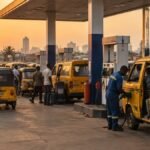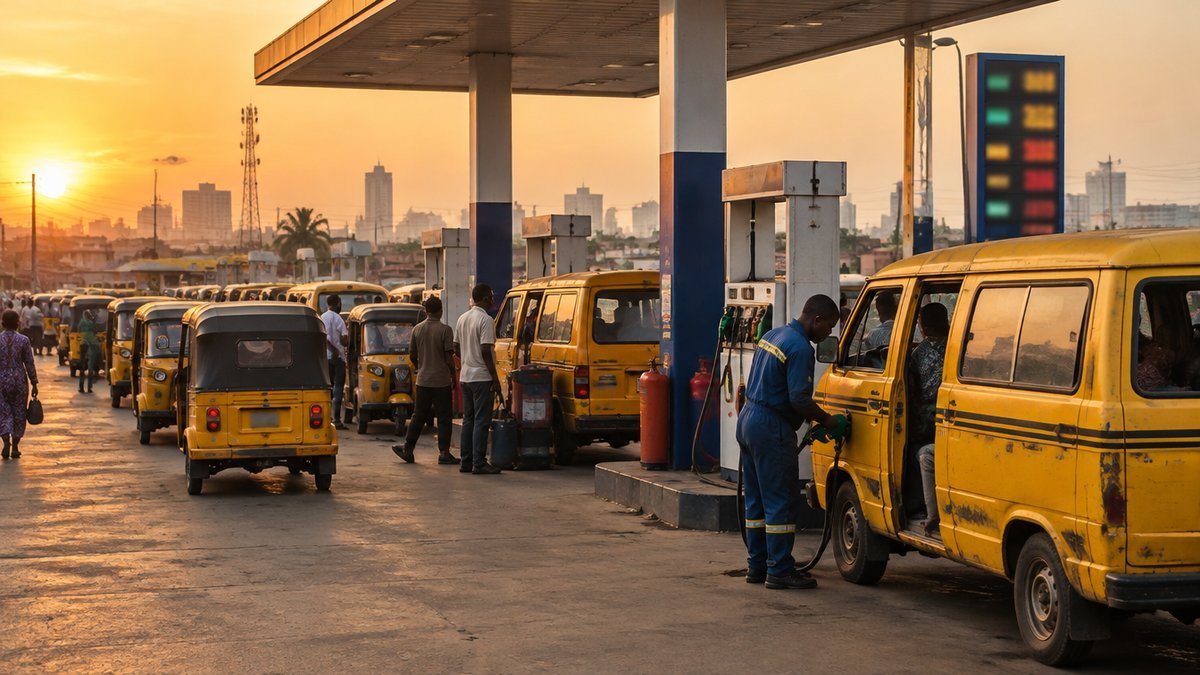
The Federal Government has announced a 30-day discount on petrol sold at NNPC filling stations, with commercial and public transport operators first in line. The move landed on Thursday, October 8, 2026 — the same day Brent crude jumped above $105 a barrel and several depots across the Niger Delta pushed up their petrol prices. If you drive for a living, run a fleet, or simply fill up a private car in Lagos, Abuja or Port Harcourt, here is what the announcement actually says, what it doesn’t say yet, and how it could affect your fuel bill over the next month.
What the Federal Government Announced
Speaking at a press briefing on fuel prices and subsidy questions in Abuja, the Minister of Finance and Coordinating Minister of the Economy, Taiwo Oyedele, said the government is offering a discount on petrol dispensed by NNPC Limited “for the next 30 days in the first instance, with priority for public transporters nationwide.”
He was careful to stress that this is not a return of fuel subsidy. In his words, as reported by several Nigerian outlets: “It’s not a subsidy; government is just saying we sell to you at cost.” In other words, NNPC is expected to drop its retail margin on petrol for the period rather than the government paying the difference between market price and pump price, as happened under the old subsidy regime.
Key points from the briefing:
- Duration: 30 days “in the first instance” — which suggests it could be extended or reviewed.
- Where: NNPC Limited retail stations only. Independent marketers and other branded stations are not covered by this announcement.
- Who gets priority: public transport operators nationwide — think danfo and commercial buses, taxis, keke and other commercial passenger vehicles.
- Mechanism: petrol sold “at cost” by NNPC, which the minister said is distinct from a subsidy.
- Discount size: not specified in the reports published on announcement day. Motorists should watch NNPC’s updated price boards and official statements for the actual per-litre figure.
The Bigger Change: A ₦1,350 Landing Cost Ceiling
The 30-day discount grabbed the headlines, but the second part of the announcement may matter more for petrol prices in Nigeria over the long run. According to the minister, the government is negotiating a ceiling of ₦1,350 per litre on the ex-gantry or landing cost of petrol.
This is not a pump price. It is a cap on what the product costs before transport, marketer margins and other charges are added. Oyedele explained that the ceiling would be reviewed monthly and the figures published openly. If the actual cost of petrol climbs above the ceiling, refiners and importers would absorb the difference upfront and recover it later when market conditions ease.
The minister summed up the thinking with a simple illustration: ₦1,400 a litre today and ₦1,400 a litre tomorrow is better than ₦1,500 today and ₦1,300 tomorrow. The goal is stability rather than a lower price — so drivers and transport operators can plan fares and budgets without the pump price lurching every few days.
Why it matters for motorists
- Fewer price shocks: if the ceiling works as described, sudden spikes from crude oil or naira swings should be smoothed out.
- Transport fares: commercial drivers often raise fares quickly when petrol goes up but rarely cut them when it comes down. A steadier price could reduce that ratchet effect.
- Not a guarantee of cheaper fuel: a ceiling on landing cost does not stop pump prices from moving within the band, and the details are still being negotiated.
Where Petrol Prices Stand Right Now
According to NNPC’s latest reported price list at the time of the announcement, petrol sells for ₦1,355 per litre in Lagos and Rivers (a ₦5 reduction from ₦1,360 in Lagos) and ₦1,370 per litre in Abuja. Some Abuja outlets were reported to still be selling at ₦1,395. Yobe had the highest listed price at ₦1,435, followed by Niger State at ₦1,433.
Snapshot of NNPC retail prices reported on October 8, 2026:
- Lagos — ₦1,355/litre
- Rivers (Port Harcourt) — ₦1,355/litre
- Abuja (FCT) — ₦1,370/litre (some outlets reported at ₦1,395)
- Niger — ₦1,433/litre
- Yobe — ₦1,435/litre
For context, industry price trackers show petrol rose from roughly ₦1,077–₦1,205 per litre in early July to around ₦1,395–₦1,500 at some stations in September, before easing slightly. Dangote Petroleum Refinery cut its petrol gantry price from ₦1,350 to ₦1,325 per litre in late September, and reduced its diesel gantry price from ₦1,850 to ₦1,780 effective October 1.
Why the Government Is Acting Now
The timing is not a coincidence. On the morning of October 8, Brent crude traded at about $105.02 per barrel, up nearly 5% from the previous day, on renewed concerns about tanker traffic through the Strait of Hormuz. Nigerian depots reacted almost immediately:
- Warri: depot petrol prices rose by up to ₦25, to as high as ₦1,330 per litre.
- Port Harcourt: depot prices moved from ₦1,292 to ₦1,300 per litre.
- Calabar: one depot lifted petrol from ₦1,300 to ₦1,315 per litre.
- Lagos diesel: one depot raised diesel (AGO) by ₦195, from ₦1,705 to ₦1,900 per litre.
Because depots price on replacement cost, a crude rally can push wholesale prices up even when existing stock was bought cheaper. Those increases usually reach the pump within days. The minister said existing interventions had not done enough to shield households and businesses from the knock-on effects of high fuel and transport costs — hence the discount and the proposed ceiling.
Separately, Dangote Refinery also informed marketers on the same day that its petrol would now be sold through a consortium of 20 approved marketers, a change that could reshape how refinery output reaches filling stations.
What It Could Mean for Your Fuel Bill
Because the exact discount has not been published yet, the figures below are illustrative only, using the Lagos NNPC price of ₦1,355 per litre as a baseline. Plug in the real discount once NNPC announces it.
Private car owners
A typical sedan doing around 10 km per litre and covering 40 km a day uses about 4 litres daily. At ₦1,355, that is roughly ₦5,420 a day, or about ₦162,600 over 30 days. Every ₦50 knocked off per litre would save around ₦6,000 over the month on that pattern. That is helpful, but private motorists should note that the government said transporters get priority — it is not yet clear how private cars will be treated at NNPC pumps.
Commercial bus and taxi operators
Commercial vehicles burn far more fuel. As a purely hypothetical example, a bus using 40 litres a day would spend about ₦54,200 daily at ₦1,355. A ₦50-per-litre discount on that volume would mean roughly ₦2,000 saved per day, or around ₦60,000 over 30 days. Operators should keep fuel receipts during the window — it will help in fare negotiations with unions and passengers if prices fall.
Okada, keke and delivery riders
Motorcycles and tricycles use far less fuel per day, so the absolute saving is smaller, but for riders earning daily it still matters. If you ride for a dispatch company, ask whether your operator will pass any NNPC discount on, or whether you are expected to buy fuel yourself.
How to Benefit From the NNPC Petrol Discount
- Find your nearest NNPC retail station. The discount applies to NNPC Limited outlets, not every filling station.
- Check the pump price before you buy. Not all NNPC stations update prices at the same time — some Abuja outlets were still above the official list price on announcement day.
- If you are a transporter, carry proof. Watch for official guidance on how “priority” for public transport operators will be verified — union membership, vehicle registration or commercial plates may come into play.
- Avoid panic buying and jerrycans. Hoarding can trigger queues and local scarcity, and storing petrol at home is a fire risk.
- Track the 30-day clock. The discount was announced on October 8 for 30 days “in the first instance,” so confirm the official start and end dates and watch for any extension.
The Honest Drawbacks
- Details are thin. No per-litre discount figure or verification process for transporters had been published on day one.
- NNPC-only. Many motorists, especially outside major cities, rely on independent stations that are not covered.
- Possible queues. Cheaper pumps tend to attract long lines, which costs commercial drivers time and money.
- Short window. Thirty days does little for long-term budgeting unless the landing-cost ceiling delivers lasting stability.
- Crude remains the wildcard. If Brent keeps climbing, pressure on depot prices will continue regardless of the discount.
Should You Rethink Your Fuel Choice?
Repeated petrol price swings are one reason more Nigerian drivers are looking at alternatives. If you run a commercial vehicle with high daily mileage, compare the numbers in our breakdown of CNG conversion cost in Nigeria. Riders weighing an e-bike can check our guide to the electric motorcycle price in Nigeria. A temporary petrol discount is welcome, but it does not change the long-term case for vehicles with lower running costs.
Key Takeaways
• The FG announced a 30-day discount on petrol sold by NNPC Limited on October 8, 2026, with priority for public transporters.
• The government says it is not a subsidy — NNPC will sell “at cost.”
• A ₦1,350-per-litre ceiling on petrol landing cost is being negotiated, to be reviewed monthly.
• NNPC’s listed prices on announcement day: ₦1,355 in Lagos and Rivers, ₦1,370 in Abuja.
• Brent crude above $105 is pushing depot prices up, so the discount arrives at a tense moment.
FAQ
Is fuel subsidy back in Nigeria?
According to the Finance Minister, no. He described the arrangement as NNPC selling petrol at cost for 30 days, not the government paying a subsidy.
How much is the NNPC petrol discount per litre?
The exact figure had not been published in reports on announcement day. Check NNPC station price boards and official NNPC or Ministry of Finance statements.
Can private car owners get the discount?
The announcement covers petrol dispensed by NNPC, with public transporters given priority. How private motorists will be treated in practice has not yet been spelled out.
Is ₦1,350 the new pump price?
No. ₦1,350 is the proposed ceiling on the ex-gantry or landing cost — what petrol costs before distribution and retail margins. Pump prices will still be higher.
Disclaimer: Fuel prices, vehicle prices, import duties and specs change frequently in Nigeria — always confirm current figures with the dealer, filling station or official source before making decisions. Information in this article is based on statements by the Federal Ministry of Finance and NNPC price lists as reported by Nigerian media on October 8, 2026.