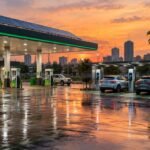
Petrol went up again on 12 September 2026, with Dangote refinery adjusting its gantry price by 6.7% to ₦1,350 per litre, up from ₦1,265. For most car owners that is an annoyance. For the thousands of dispatch riders moving parcels around Lagos, Abuja and Port Harcourt every day, it is a direct cut to take-home pay — because fuel is the single biggest running cost in the job, and almost nobody raises their delivery rate the same week petrol moves.
So what does a dispatch rider in Nigeria actually earn in 2026, once the bike, the fuel, the repairs and the police wahala are all paid for? This guide breaks down the real numbers: what employers pay, what independent riders bring in, what a delivery bike costs to buy, and roughly how much is left at the end of the month.
Dispatch Rider Salary in Nigeria 2026: What Employers Pay
There are two completely different income models in this business, and mixing them up is how new riders end up disappointed. The first is salaried work — you ride for a logistics firm, an e-commerce company, a restaurant chain, a hospital or a courier service, and they pay you monthly.
Based on 2026 Nigerian logistics job data, the salaried ranges look like this:
- ₦60,000 – ₦130,000 per month — the common range for an employed dispatch rider
- Up to ₦150,000 per month at some companies, depending on workload and incentives
- ₦120,000 – ₦200,000 per month at higher-end logistics firms once bonuses are included
The critical question to ask at interview is who fuels the bike. A ₦130,000 job where the company provides the motorcycle and covers petrol is worth far more than a ₦180,000 job where you supply your own bike and buy your own fuel. At ₦1,350 per litre, that difference can easily be ₦60,000–₦90,000 a month. Get it in writing before you resume.
What About Independent and App-Based Riders?
The second model is working for yourself — taking jobs from delivery apps, vendors, small businesses and walk-in customers. Here the reported figures are much wider: ₦10,000 to ₦25,000 per day in a busy city like Lagos, depending entirely on how many orders you land.
That sounds far better than a salary, and on a good day it is. But that number is gross revenue, not profit. Out of it comes fuel, maintenance, data, the bike itself, and the days when the orders simply do not come. A salaried rider gets paid when business is slow. An independent rider does not.
For context, customers in Lagos are typically charged ₦3,500 to ₦12,000 per delivery depending on distance. If you ride under a logistics platform, a share of that goes to the platform before it reaches you.
Delivery Bike Prices in Nigeria 2026
If you are buying your own machine, this is the biggest single cheque you will write. Commercial motorcycle prices in Nigeria move constantly because almost every component is imported, so the naira exchange rate and import duties feed straight into the showroom price.
Recent 2026 market listings put the popular dispatch models roughly here:
- Bajaj Boxer — around ₦600,000. The BM 150 is the long-standing favourite among commercial riders for ruggedness and fuel economy.
- TVS commercial models — around ₦700,000. The TVS HLX Star is widely picked for dispatch work thanks to its economical engine and tougher shocks, which matter on Lagos roads.
- Haojue UD110 — around ₦670,000, with the higher-spec Haojue models climbing well above that.
Treat all of those as indicative market figures, not fixed prices. They vary by state, by dealer, and by the week you walk in. Prices in Lagos, Kano and Port Harcourt are rarely identical, and a naira slide can move them within a single month.
Buy Outright, or Lease-to-Own?
Most new riders cannot drop ₦600,000–₦700,000 at once, so lease-to-own and rider-financing schemes have become common, where you ride the bike and pay it down weekly until it is yours. These can work well, but check three things before signing:
- The total repayable amount, not the weekly figure. A comfortable weekly payment stretched long enough can cost far more than the bike is worth.
- Who owns the papers until the final payment, and what happens if you miss a week.
- Who pays for repairs and insurance during the lease period.
The Real Running Costs Nobody Warns You About
This is where most dispatch-rider income calculations fall apart. The revenue is visible; the costs are not.
- Fuel. At ₦1,350 per litre, a rider covering long daily distances is spending serious money before earning a naira. Fuel is now the number-one variable in rider profit.
- Maintenance. Chains, sprockets, brake pads, tyres, plugs and engine oil on a bike doing city mileage every day. Lagos potholes and flooded roads accelerate wear considerably.
- Documentation. A valid rider’s permit or driver’s licence and proper vehicle papers. Riding without them is not a saving — it is a fine waiting to happen.
- Phone and data. You cannot work the apps without a functioning smartphone and consistent data.
- Downtime. Every day the bike is at the mechanic is a day of zero income if you are independent.
A Worked Example (Estimate Only)
Here is the arithmetic every prospective rider should do for themselves. Take an independent Lagos rider earning at the lower end — ₦12,000 gross per day, working 26 days a month. That is roughly ₦312,000 gross monthly.
Now subtract, using your own real figures:
- Fuel for the month at the current pump price
- Routine servicing and a realistic allowance for one unplanned repair
- Weekly lease or loan repayment, if you are not riding your own bike
- Data, and a buffer for fines or levies
The honest answer is that a lot of independent riders end up somewhere close to the salaried range once everything is deducted — with more freedom, more risk, and no guaranteed floor when business is slow. The riders who genuinely out-earn a salary are usually the ones with repeat corporate clients rather than app scraps, and a bike they already own outright.
Where the Work Is — and Where You Cannot Ride
Demand is heaviest in Lagos by a wide margin, followed by Abuja, Port Harcourt, Ibadan and a growing market in Kano. But volume is only half the picture: restrictions matter just as much.
Several states enforce motorcycle bans or corridor restrictions, and the rules differ sharply from state to state and even between local government areas. A route that is fine on one axis can get your bike impounded a few kilometres away. Before you commit to an area, confirm exactly which roads and LGAs are open to commercial motorcycles — our state-by-state guide to Nigeria’s okada rules sets out where riders currently stand.
Should You Switch to an Electric Delivery Bike?
With petrol at ₦1,350, the case for electric two-wheelers in delivery work is stronger than it has ever been, and several operators now run electric fleets with battery-swap arrangements for riders. The attraction is obvious: fuel is the cost that is hurting, and an electric bike removes it.
The trade-offs are equally real — higher purchase price, dependence on charging or swap-station coverage in your specific area, Nigeria’s unreliable grid, and a thinner spare-parts and repair network than the Bajaj and TVS ecosystem enjoys. It suits riders working a dense, predictable urban route with a swap point nearby far better than someone covering long, unpredictable distances. We break the numbers down in our electric bike cost guide for Nigerian riders.
What You Need to Start
- A valid rider’s permit or driver’s licence
- A motorcycle — owned, leased, or provided by the company
- A smartphone for tracking and delivery apps
- Solid knowledge of city routes and shortcuts
- Basic communication skills for dealing with customers and vendors
- A helmet and, sensibly, insurance cover
Key Takeaways
Before you buy a bike or accept a dispatch job, hold on to these five points:
- Salaried riders realistically earn ₦60,000–₦130,000 a month, with ₦120,000–₦200,000 possible at stronger firms with bonuses.
- The ₦10,000–₦25,000 daily figure for independent riders is revenue, not profit. Fuel, repairs and repayments come out of it.
- Always establish who pays for petrol before accepting a salaried role — at ₦1,350 per litre it can outweigh the salary difference entirely.
- Budget roughly ₦600,000–₦700,000 for a common new dispatch bike, and confirm current pricing with the dealer on the day.
- Check the okada rules for your exact route before investing, not after.
Dispatch riding remains one of the most accessible ways to earn in Nigeria’s logistics economy, and demand is not going anywhere while e-commerce keeps growing. But it rewards riders who treat it as a business with a spreadsheet, not a job with a bike. Know your cost per delivery, review your rates when fuel moves, and the margin is there.
Vehicle prices, import duties and specs change frequently in Nigeria — always confirm current figures with the dealer or official source before buying.
Figures cited from 2026 Nigerian logistics salary data, current motorcycle market listings, and Dangote refinery’s September 2026 petrol price adjustment as reported by Nigerian business media.