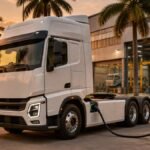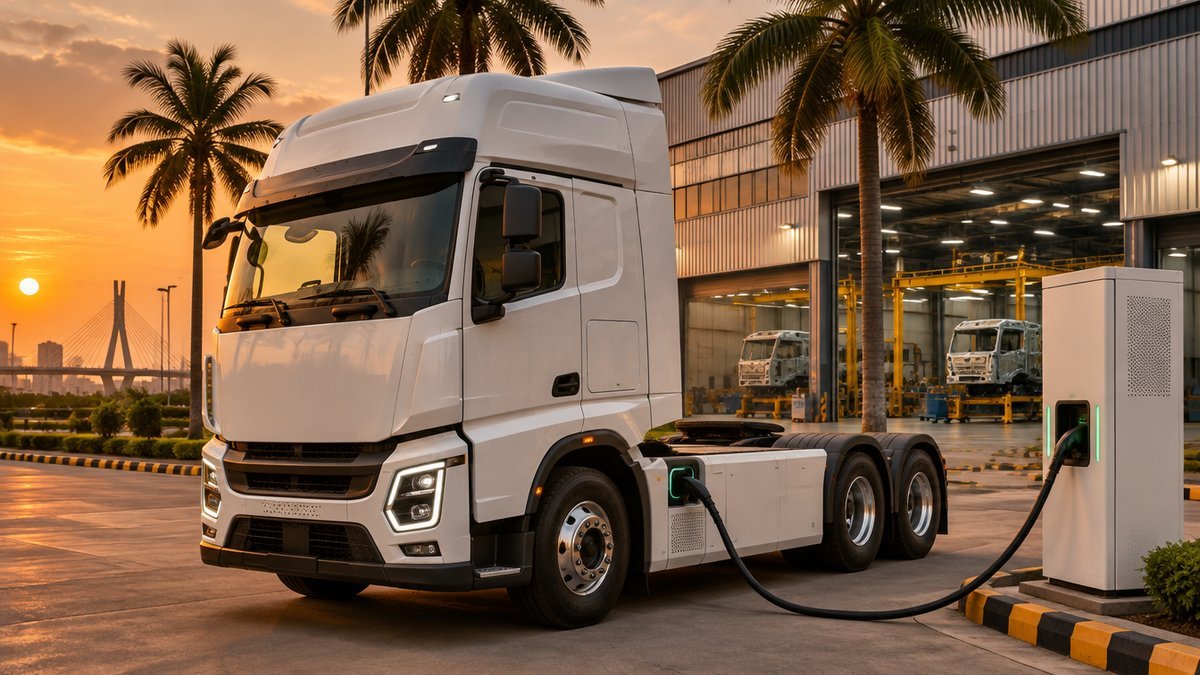
Nigeria now has a heavy-duty electric truck that was put together on Nigerian soil. On Sunday, 15 November 2026, Dangote Sinotruk West Africa Limited rolled out its first locally assembled electric heavy-duty truck at its plant in Ikeja, Lagos. Sinotruk Group president Liu Wei called it “the first new-energy truck to be assembled on the African continent.”
That is a big headline for a country where almost all freight moves by road on diesel. But a launch event is not the same as a truck you can order. This explainer covers what was actually announced, what is still unknown (including the price), and what fleet owners, haulage operators and logistics businesses in Lagos, Abuja, Port Harcourt and Kano should look at before they get excited about electric trucks in Nigeria.
What Dangote Sinotruk unveiled in Lagos
Dangote Sinotruk is a joint venture between the Dangote Group and China’s Sinotruk. Early reports put the plant at about $100 million, with a 60/40 ownership split in Dangote’s favour. The venture was formally set up in 2014, its first heavy truck came off the Ikeja line in 2017, and the plant has a stated capacity of roughly 10,000 trucks a year on a single shift. Over 8,000 vehicles have been assembled there so far. A welding and e-coating paint line for commercial vehicles was added in 2024.
The new truck is battery-electric and heavy-duty, built to compete with the diesel tractors that haul cement, fuel, food and containers across the country. Devakumar Edwin, Group Vice-President of Dangote Industries Limited, described the move this way: “So, we went into CNG technology and now we are going into electric technology.”
Who was at the launch
- Liu Wei, president of Sinotruk Group, called the day historic and said the truck fits Nigeria’s long-term goals of cutting carbon emissions and modernising its energy mix.
- Devakumar Edwin of Dangote Industries said the company has “set up our team” and will help buyers with charging facilities and technical know-how.
- Olasunkanmi Ojowuro, managing director of Lagos Bus Services, represented the Lagos State Commissioner for Transportation. He said locally assembled electric trucks could cut emissions and long-term transport costs.
- Oba Latif Egbeyemi, the Ologba of Ogba Kingdom, welcomed the investment and asked for local content, youth training, reliable electricity, charging facilities, standards and incentives.
- Akeem Dauda, chairman of Ikeja Local Government, promised a business-friendly environment and better infrastructure around the plant.
Dangote electric truck price, range and battery: what we know
This is the part buyers care about most, and the short answer is that the key numbers have not been published. Per reporting from the unveiling, the companies have not released any of the following:
- A model name or trim designation for the electric truck
- The price in Naira (or dollars)
- Battery capacity (kWh) and battery warranty
- Driving range, including tested range at different payloads
- Charging time and energy use per kilometre
- How many electric units the Ikeja plant will build, and when deliveries start
Treat any website or dealer quoting a “Dangote electric truck price in Nigeria” right now with caution. Until Dangote Sinotruk issues a price list, any figure is a guess. If you run a fleet and are interested, ask the company for a formal quotation and a written spec sheet, and make sure it covers payload, range and battery warranty.
Some wider targets have been mentioned in industry presentations, including a goal of 8,000 CNG and electric trucks by 2027 and about 155 electric trucks planned for pan-African operations in 2026. These figures were not tied specifically to the Ikeja electric model, so they do not tell us when you could actually buy one.
Electric truck vs diesel truck in Nigeria: the running-cost question
The main argument for any electric truck is lower running cost. Electricity per kilometre is usually cheaper than diesel, and electric drivetrains have far fewer moving parts. That means no oil changes, no injector or turbo problems, and less brake wear thanks to regenerative braking. For a haulage business whose biggest cost is fuel, that matters.
Dangote has not put a number on the savings, though. Edwin said savings will depend on the price of electricity, how the truck is used, and whether charging points, spare parts and trained technicians are available. That is the right caveat. Any comparison you see showing electric trucks as dramatically cheaper than diesel or CNG should be treated as an indicative estimate until there is Nigerian data from real routes.
How to do your own rough comparison
Once Dangote Sinotruk publishes specs, a fleet manager can sketch the economics in four steps:
- Energy cost per km: multiply the truck’s kWh-per-km figure by what you actually pay per kWh. That might be grid power on your NERC tariff band, a commercial charging tariff, or diesel generator power, which can wipe out most of the saving.
- Diesel cost per km: divide your current diesel spend by kilometres covered, using your own fleet records rather than brochure figures.
- Maintenance: compare your yearly diesel servicing, tyre and parts costs with the maintenance plan Dangote Sinotruk offers.
- Purchase and finance: add the upfront price difference, the interest on any asset finance, and a realistic value for the battery at the end of the truck’s life.
If you have read our breakdown of the November 2026 petrol price drop, the same idea applies to trucks. The pump price is only one line in the total cost of keeping a vehicle on the road.
The big obstacle: charging and Nigeria’s power grid
An electric heavy-duty truck needs a lot of energy, delivered reliably. That is Nigeria’s weakest point. According to NERC data cited in coverage of the launch, average available generation capacity in October 2026 was 4,744 MW and average hourly generation was 4,047 MW, with grid frequency and voltage outside prescribed limits during the month. That is a very thin supply for a country of Nigeria’s size.
For truck operators, this means:
- Depot charging is the realistic first step. Trucks that run fixed routes and return to base, such as cement runs, factory-to-depot shuttles and port-to-warehouse loops in Lagos, are the best early fit.
- Long-haul routes are harder. A Lagos–Kano or Port Harcourt–Abuja run depends on charging along the highway, and that network does not exist yet. Our report on new Lagos CNG stations shows how slowly even gas refuelling infrastructure is spreading.
- Solar and battery storage at depots may be needed to avoid running chargers off diesel generators.
Dangote Sinotruk has said it is preparing charging infrastructure, technical support, spare parts and after-sales service, but has not said where, how many sites, or what power source they will use.
Policy tailwinds: EV import duty and VAT exemption
The launch comes a few months after a major policy change. In August 2026, the Nigeria Customs Service announced import duty and VAT exemptions for battery-electric vehicles and certain extended-range EVs with at least 200 km of all-electric range, under the presidential “Gas for Growth” initiative. CNG- and LPG-only vehicles and certified electric tricycles and motorcycles are covered too. Importers need an exemption certificate. Hybrids remain dutiable, and vehicles valued at $100,000 or more are excluded.
Separately, the Electric Vehicle Transition and Clean Mobility Bill 2025 passed second reading in the Senate in November 2025. As proposed, it would push foreign EV makers to partner with licensed local assemblers and source at least 30% of components locally by 2030. It is still a bill, not law. Local assembly like the Ikeja plant is the kind of activity it aims to encourage.
Local content and jobs
Sinotruk says it will train Nigerian engineers and technicians, including practical sessions for selected staff at its facilities in China, and wants to open more technical and manufacturing roles to young Nigerians. That matters for owners too. An electric truck is only as good as the technician who can fix it in Lagos rather than waiting for one from abroad.
Keep expectations realistic, though. Local assembly is not the same as local manufacturing. Batteries, motors and power electronics are still likely to be imported for now, and that affects both spare-parts lead times and FX-driven pricing.
How it fits Nigeria’s wider EV and CNG shift
The Dangote truck is part of a broader move away from diesel and petrol in commercial transport:
- Nigerian Sinotrucks Limited, a separate company, introduced Sitrak electric light trucks earlier in November 2026.
- Dangote signed a deal with Foton in February 2026 for more than 1,000 CNG tractors and semi-trailers.
- Lagos is adding electric buses. See our piece on Oando’s electric bus rollout.
- Globally, BloombergNEF reports 158,000 medium- and heavy-duty electric trucks were sold in the first half of 2026, up 75% year on year, with over 90% of them in China.
Honest drawbacks to weigh
- No published price, range or battery warranty yet, so you cannot run a real cost comparison today.
- Highway charging for long-haul routes does not exist at scale.
- Unreliable grid power could push operators onto generator charging, which cuts into the savings.
- Resale value for used electric trucks in Nigeria is untested.
- Repair skills and battery parts are still scarce outside the manufacturer’s own network.
Key takeaways and FAQ
Key takeaway: Dangote Sinotruk’s Ikeja-assembled electric truck is a real milestone for Nigerian industry, but it is not yet a product you can price or compare. Fleet operators on short, fixed, depot-based routes should get in early talks with the company. Long-haul operators should wait for real-world range data and a charging network.
When was the Dangote electric truck unveiled?
On Sunday, 15 November 2026, at the Dangote Sinotruk West Africa plant in Ikeja, Lagos.
How much is the Dangote electric truck in Nigeria?
No official price has been announced. Ignore unofficial figures and request a formal quote from Dangote Sinotruk.
What is its range and battery size?
Not yet published. Range, battery capacity, charging time and warranty were not disclosed at the launch.
Are electric trucks exempt from import duty in Nigeria?
Under the Customs exemption announced in August 2026, qualifying battery-electric vehicles are exempt from import duty and VAT with an exemption certificate. A locally assembled truck follows a different route, so confirm the tax position for your purchase with Customs or your tax adviser.
Is an electric truck cheaper to run than diesel?
Usually per kilometre, if you charge on reasonably priced, reliable power. In Nigeria, the result depends heavily on your electricity source, routes and access to service support.
Disclaimer: Vehicle prices, import duties and specs change frequently in Nigeria. Always confirm current figures with the dealer or official source before buying.
Information attributed to statements made at the 15 November 2026 unveiling as reported in the Nigerian press, the Nigeria Customs Service, NERC and BloombergNEF.