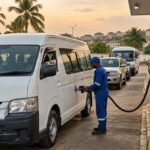
With petrol hovering around ₦1,350 to ₦1,400 a litre in most states, the sums that used to make okada work no longer add up. A rider who once spent ₦1,500 a day on fuel is now spending three or four times that, and the fare he can charge has not tripled. That squeeze is the single biggest reason electric bikes have stopped being a curiosity in Nigeria and started showing up on real streets — in Lagos, in Ogun, and increasingly in northern cities like Gombe.
But a quiet bike is not automatically a cheaper bike. This guide breaks down what an electric motorcycle actually costs in Nigeria in 2026, what it costs to run per kilometre, where the battery-swap networks reach, and the honest drawbacks nobody selling you one will mention.
Electric bike price in Nigeria 2026: what you will actually pay
There is no single national price, and anyone quoting you one figure is guessing. What exists is a spread, and it depends heavily on whether you are buying through a fleet operator or off an open marketplace.
- Fleet-operator bikes (Spiro and similar): Spiro’s West Africa director said in September 2025 that the company had brought its current models down to roughly ₦1.44 million, against an average of about ₦1.35 million for a comparable petrol motorcycle. He also noted that earlier-generation electric bikes had sold for as much as ₦3 million, which tells you how fast this end of the market has moved.
- Open-market listings: classified and dealer listings in 2026 commonly run from around ₦450,000 to ₦900,000 for smaller, lower-powered electric bikes and scooters, with mid-range commercial-capable models listed between ₦1.1 million and ₦1.4 million. Premium imports appear as high as ₦2.5 million.
- Field reporting: an August 2026 Al Jazeera report from Gombe put the typical electric motorcycle in use there at about ₦1 million.
Treat all of these as ranges, not quotes. Nigerian vehicle pricing moves with the naira, with clearing costs and with whatever a particular dealer paid for his last container. The ₦450,000 end of the market is also not the same product as the ₦1.4 million end — cheap listings are frequently light scooters that will not survive a full commercial day on Lagos roads.
One policy detail worth knowing
Nigeria removed value-added tax on electric motorcycles, a change Spiro’s Nigeria team referenced publicly in 2025. That is part of why the landed price has come down. Whether a specific bike you are looking at benefited from it depends on when and how it was imported — ask the dealer directly rather than assuming.
Running costs: the number that actually matters
The purchase price is close to parity with petrol bikes. The running cost is where the gap opens.
Spiro’s own figures, given at a Lagos media event, put a 100km trip at roughly ₦2,000 on an electric bike versus about ₦3,000 on a petrol bike, with total savings on fuel plus maintenance of around 36%. Those are the operator’s numbers, so read them as a best case — but independent field reporting points the same direction. In Gombe, one rider told Al Jazeera he was saving about ₦5,000 a week in fuel alone. Another said he had stopped buying engine oil entirely.
The maintenance side is underrated. A petrol okada in daily commercial service eats oil changes, filters, spark plugs, chain and sprocket sets, and clutch work. An electric bike has none of the first three and far fewer moving parts. The Gombe rider quoted above reported no major maintenance in three months of use — his one failure was a charger that burned out because he plugged it in without a stabiliser, which is a lesson in itself.
Rough weekly maths for a commercial rider
- Petrol okada: at roughly ₦1,375/litre and a full day’s riding, fuel alone commonly runs ₦4,000–₦7,000 daily depending on distance covered, plus recurring servicing.
- Electric okada: energy cost per 100km sits near ₦2,000 on swap-based pricing, with servicing that is mostly tyres, brakes and suspension.
- The catch: those savings only materialise if you can reliably get charged or swapped. That is entirely a question of where you ride.
Battery swapping: the thing that makes or breaks the decision
Charging an electric bike at home in a country with a few hours of grid power a day is not a plan. This is why the serious operators have built their businesses around battery swapping — you ride into a station, exchange a depleted battery for a charged one in a couple of minutes, and pay a fee.
Spiro entered Nigeria in July 2024 through Ogun State. As of September 2025 it reported 64 active swap substations in Lagos and about 3,500 motorcycles delivered, against a stated backlog of 20,000 orders, with a target of 1,000 stations nationwide. MAX, the Nigerian mobility financing company, raised $24 million in January 2026 in a blended equity and debt round specifically to expand its fleet, its swap and charging infrastructure, and its rider financing. Swap Station Mobility has run courier-focused pilots in Lagos, including a rollout with SiltechWorld and Glovo covering Ikate, Lekki and Victoria Island on lease-to-own terms.
Operators are also working around the grid. Spiro has said it uses second-life batteries imported from Togo as station-level storage so swap points keep running when power is out. Clean-energy operators argue solar-backed swap stations are the only version of this that makes sense — as one Nigerian clean-energy CEO put it to Al Jazeera, charging these bikes off diesel generators just moves the emissions from the exhaust pipe to the generator pipe.
What this means for where you live
If you ride commercially in Lagos or parts of Ogun, the swap network is real and reachable. If you are in Abuja, Port Harcourt, Kano or a smaller city, check station coverage on your actual daily route before you buy, not after. An electric bike with no swap point within range is a bike you will be charging off a generator, and at that point the economics collapse.
How it compares to your other options
- Versus a new petrol okada: similar upfront cost at the fleet-operator end, meaningfully cheaper to run, but dependent on swap infrastructure and harder to resell into a market that does not yet understand it.
- Versus a used petrol bike: a fairly-used petrol bike is still far cheaper to buy. If your capital is tight and your route has no swap coverage, this remains the rational choice today.
- Versus CNG conversion: CNG is a car and keke story more than a motorcycle one. For two-wheelers, electric is the live option.
- Versus doing nothing: the risk of standing still is that several states keep tightening okada restrictions, and fuel is not getting cheaper.
The honest drawbacks
- Power supply. Nigeria’s grid is the fundamental constraint. Outside swap-network coverage, home charging is unreliable and generator charging destroys the cost advantage.
- Battery replacement. The single most expensive component will eventually degrade. On battery-as-a-service plans this is the operator’s problem; if you bought the battery outright, it is yours, and there is no mature battery recycling or replacement market in Nigeria yet.
- Spare parts and mechanics. Every roadside mechanic can fix a petrol okada. Very few can diagnose a controller fault. Operators are training technicians, but coverage is thin outside the main corridors.
- Resale value. Genuinely unknown. There is no established second-hand market for electric bikes in Nigeria, so do not assume you can recover value the way you would with a Bajaj.
- Fleet controls. Operator bikes typically carry GPS trackers and can be remotely immobilised or geo-fenced. Useful against theft, but understand that it is in the contract before you sign a lease-to-own.
- Charger fragility. Use a stabiliser. Nigerian voltage swings will kill a charger, as riders have already learned the hard way.
Key takeaways
- Price: expect roughly ₦1 million to ₦1.44 million for a commercial-grade electric bike in 2026; cheaper listings exist but are usually lighter machines.
- Running cost: around ₦2,000 per 100km on swap pricing versus about ₦3,000 on petrol, with roughly a third saved once maintenance is included.
- Infrastructure is the deciding factor. Lagos and Ogun have real swap coverage; most of the country does not yet.
- Best fit: full-time commercial and delivery riders on fixed urban routes inside a swap network. The daily mileage is what pays back the premium.
- Worst fit: occasional riders, long inter-city runs, and anyone outside swap coverage relying on grid or generator charging.
- Before you sign: confirm swap station locations on your route, the swap fee structure, who owns the battery, and what happens when it degrades.
Frequently asked questions
Is an electric bike cheaper than a petrol okada overall? On energy and maintenance, yes, by a meaningful margin for a high-mileage rider. On purchase price, roughly comparable at the fleet-operator end and more expensive than a used petrol bike.
How long does a battery swap take? Operators describe it as a couple of minutes — the point of the model is that it is closer to a fuel stop than a charging session.
Can I charge at home instead? Technically yes, and riders in cities like Gombe do. Practically it depends on your power band and whether you have a stabiliser. Budget for the charge time and the unreliability.
Do the state okada bans apply to electric bikes? Restrictions in Lagos, Ondo, Oyo and elsewhere are written around commercial motorcycle operation, not the fuel in the tank. An electric bike does not exempt you — check your state’s current rules.
Attribution, plain text: figures in this article come from Al Jazeera’s August 2026 report from Gombe, Techpoint Africa’s coverage of Spiro’s Lagos media event, and publicly reported funding announcements from MAX and Spiro.
Vehicle prices, import duties and specs change frequently in Nigeria — always confirm current figures with the dealer or official source before buying.