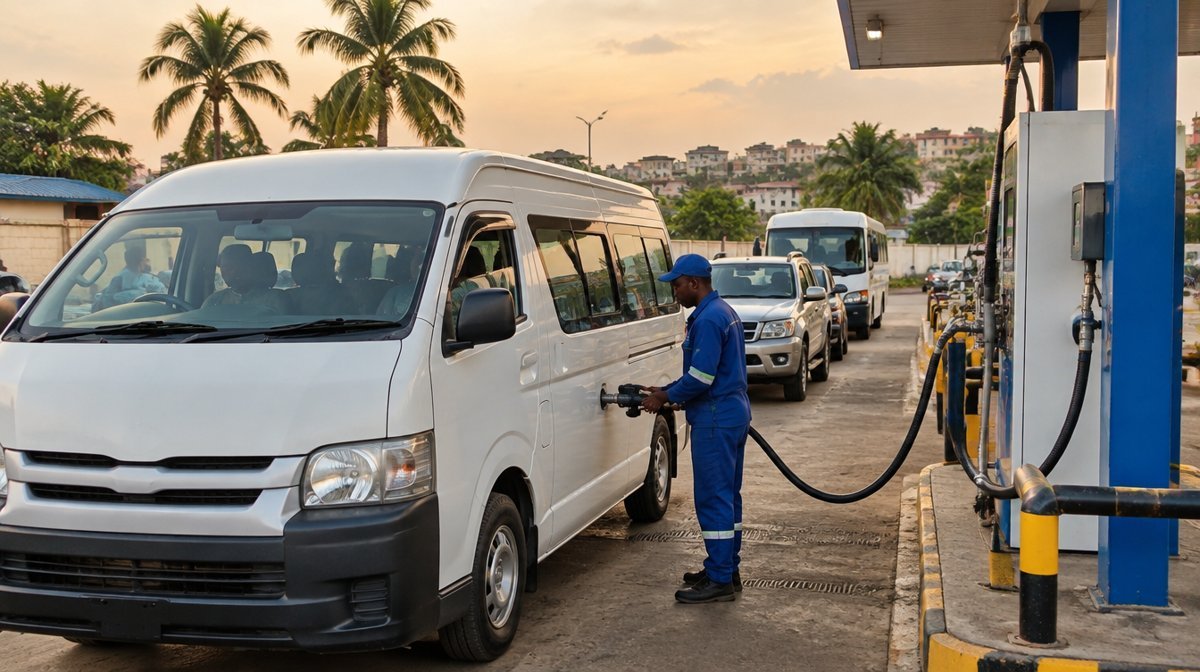
If you drive anywhere in Nigeria right now, the maths is brutal. Petrol is selling between N1,400 and N1,450 per litre across most major cities, and a modest 50-litre tank now costs more than N70,000 to fill. That is the backdrop to the biggest fuel story of the month: President Bola Tinubu has told state governors and transport operators to deliver measurably cheaper transport fares from 1 October 2026, and compressed natural gas is the lever he expects them to pull.
For ordinary car owners, okada and keke riders, and commercial bus operators, the question is simpler and more personal. What does it actually cost to convert your vehicle to CNG in Nigeria in 2026, can you get it done free, and does the sum work out? Here is an honest breakdown based on what is publicly known as of September 2026.
What Is Actually Happening Before October 1
At a meeting with state governors on 27 August 2026, the Presidency set 1 October as the date Nigerians should start seeing real reductions in what they pay to move around. On 19 September, the President repeated the instruction, urging states to accelerate CNG and electric transit rollouts and ruling out any return to a petrol subsidy regime, framing locally sourced gas as Nigeria’s main defence against swings in global crude and product prices.
The numbers quoted by the Presidency as of late August 2026:
- More than 120,000 vehicles converted to CNG nationwide
- Over 400 certified conversion centres operating across the states
- More than 90 CNG refuelling stations in operation
- A first batch of 500 refuelling stations expected by the end of October 2026, with another 500 to be ordered, for a target of 1,000
The Presidential CNG Initiative has also pointed to fares that have already fallen on CNG routes. Reported examples include the Lagos-Ibadan run in Oyo State dropping from roughly N8,000 to N3,200 on CNG buses, Enugu-Nsukka falling from N2,500 to N1,500, and several Abuja routes cut by around 40 per cent, such as Area 1 to Gwagwalada going from N1,500 to about N900. The President also cited N3.5 billion in savings for Kaduna commuters. These are route-specific government figures, not a nationwide average, so treat them as what is possible rather than what you will automatically pay tomorrow.
CNG Conversion Cost in Nigeria 2026: The Real Naira Numbers
Conversion pricing varies by engine size, cylinder capacity, kit quality and the centre you use. Based on figures reported by Nigerian conversion centres and industry coverage in 2026, the typical ranges are:
- Small cars and mid-size saloons (Toyota Corolla, Camry, Honda Accord and similar): roughly N350,000 to N600,000
- SUVs and mini-buses (Highlander, Sienna, Hiace-type buses): roughly N500,000 to N900,000
- Heavy commercial buses and trucks: roughly N1 million to N1.7 million
Those ranges are estimates and they move with the exchange rate, because most cylinders and conversion kits are still imported. Confirm the exact quote with a PCNGi-approved centre before you commit, and get the price broken down into kit, cylinder, labour and certification so you can compare centres properly.
Who Qualifies for the Free Conversion Scheme
The Federal Government’s free conversion programme is aimed squarely at commercial vehicles, not private cars. According to the Presidential CNG Initiative, eligibility generally requires that the vehicle is:
- Registered with the National Union of Road Transport Workers (NURTW), or
- Registered with the Road Transport Employers’ Association of Nigeria (RTEAN), or
- A state-owned taxi or government vehicle, or
- Carrying commercial plate numbers, including ride-hailing vehicles
The stated target is one million free conversions by 2027. Private car owners outside those categories generally pay, though various incentive and financing arrangements have been announced that can cover part of the cost for qualifying applicants. If you drive for Bolt, Uber or inDrive with commercial plates, it is worth checking your eligibility at an approved centre before paying full price.
Does the Fuel Saving Justify It?
This is where CNG earns its reputation. CNG has been selling at roughly N350 per kilogramme, or around N400 per standard cubic metre depending on the station, against petrol at N1,400 to N1,450 per litre. In rough energy terms that is a fuel bill cut of well over half for a bi-fuel vehicle running mostly on gas.
A simple way to think about payback: if you currently spend N120,000 a month on petrol and CNG cuts that to around N45,000, you are saving roughly N75,000 a month. On a N500,000 conversion, that is a payback period of about seven months. A low-mileage private driver spending N30,000 a month on fuel will wait two years or more to break even, which is why CNG makes far more sense for commercial and high-mileage drivers than for someone doing school runs three times a week.
Run your own numbers before converting. Take your honest monthly fuel spend, assume CNG cuts it by roughly 55 to 65 per cent where gas is actually available on your routes, and divide the conversion quote by that monthly saving. If the answer is more than about 18 months, think carefully.
The Drawbacks Nobody Should Skip
Reporting in September 2026 has been blunt about the problems, and any honest buyer guide has to be as well. Nairametrics reported that vehicle owners frequently find the savings from cheaper fuel undermined by the sheer difficulty of accessing CNG. The recurring complaints:
- Refuelling is still scarce. Roughly 90 stations for a country of Nigeria’s size and geography means long detours in many states and very little coverage outside major corridors. Queues at the stations that do exist are a common complaint.
- Upfront cost is real. Half a million Naira is a serious outlay for most households, and financing access for both drivers and small conversion centres remains limited.
- Installation quality varies. Safety concerns around cylinders and poorly done installations have been widely reported, and the CEO of the Pi-CNG/EV initiative has acknowledged that explosion fears are slowing adoption. This is the single strongest argument for using only a certified, PCNGi-approved centre and refusing roadside or informal jobs at any price.
- Supply chain bottlenecks. Operators cite delays importing equipment, thin local manufacturing capacity for cylinders and kits, regulatory approval timelines and uneven coordination between states.
- Boot space and resale. The cylinder eats into your boot, and the resale market for converted vehicles is still young and thin.
Safety: Non-Negotiable Checks
If you convert, insist on all of the following:
- A centre that appears on the PCNGi approved list, not a recommendation from a mechanic friend
- Documentation for the cylinder, including manufacture date and test certification
- A written warranty on the kit and the installation
- A clear schedule for cylinder re-inspection and leak testing
- Confirmation from your insurer that the conversion is declared, so a claim is not voided later
CNG vs Petrol vs Electric in Nigeria Today
For most Nigerian drivers the realistic comparison looks like this:
- Petrol — no upfront cost, fuel available everywhere, but the most expensive per kilometre by a wide margin at current pump prices.
- CNG (bi-fuel conversion) — meaningful upfront cost, dramatically cheaper fuel, but refuelling coverage is the binding constraint. The bi-fuel setup is its saving grace: if you cannot find gas, you switch back to petrol and keep moving.
- Electric — lowest running cost per kilometre where charging is solved, but the highest purchase price and the thinnest charging network, and grid reliability pushes many owners toward solar charging setups that add cost.
CNG’s practical advantage is precisely that it does not force an all-or-nothing bet. A properly converted bi-fuel vehicle keeps its petrol system intact.
Key Takeaways
- Expect to pay roughly N350,000 to N600,000 for a typical saloon conversion and N500,000 to N900,000 for an SUV or mini-bus, subject to the exchange rate and the centre.
- Free conversion is for commercial vehicles registered with NURTW or RTEAN, state-owned taxis, commercial plates and ride-hailing operators, with a one million target by 2027.
- The fuel saving is genuine at roughly N350 per kg against petrol above N1,400 per litre, but it only pays back quickly if you drive a lot.
- Refuelling access is the deal-breaker in most states until the promised 500 stations actually land from October 2026.
- Use only PCNGi-approved centres. Installation quality and cylinder safety are the real risks, not the technology itself.
- Do not expect fares to drop everywhere on 1 October. The reductions so far have been route-specific, concentrated where CNG buses and stations already operate.
Frequently Asked Questions
Will CNG damage my engine? A properly installed kit from a certified centre on a healthy engine should not. Poor installations, wrong kit selection for the engine, and skipped servicing are where the damage stories come from.
Can I still use petrol after converting? Yes. Standard conversions in Nigeria are bi-fuel, so you retain the petrol tank and switch between fuels. Given how patchy CNG refuelling still is, this matters a great deal.
How long does conversion take? Typically one to three days at a busy certified centre, though backlogs around the free-conversion scheme can stretch that considerably.
Is it worth it for a private car? Only if you cover high mileage and have a CNG station on a route you use regularly. Otherwise the payback period stretches past the point where it makes financial sense.
What about okada and keke? Tricycles are part of the conversion push and are far cheaper to convert than cars, but availability of kits and approved centres for three-wheelers varies sharply by state. Ask locally.
The Bottom Line
The 1 October target is a political deadline, not a switch that will make transport cheap nationwide overnight. What is real is the arithmetic: CNG at around N350 per kilogramme against petrol above N1,400 per litre is a saving no Nigerian driver covering serious mileage can ignore. What is equally real is that the infrastructure has not caught up, and the government’s own figures, around 90 stations today against 1,000 targeted, say so plainly.
If you drive commercially and qualify for free conversion, the decision is close to automatic. If you are a private owner considering a N500,000 outlay, check first that you can actually refuel near the roads you drive, then run the payback maths before you pay anyone. Figures in this article are drawn from statements by the Presidency and the Presidential CNG Initiative and from Nigerian business reporting in September 2026.
Vehicle prices, import duties and specs change frequently in Nigeria. Always confirm current figures with the dealer or official source before buying.