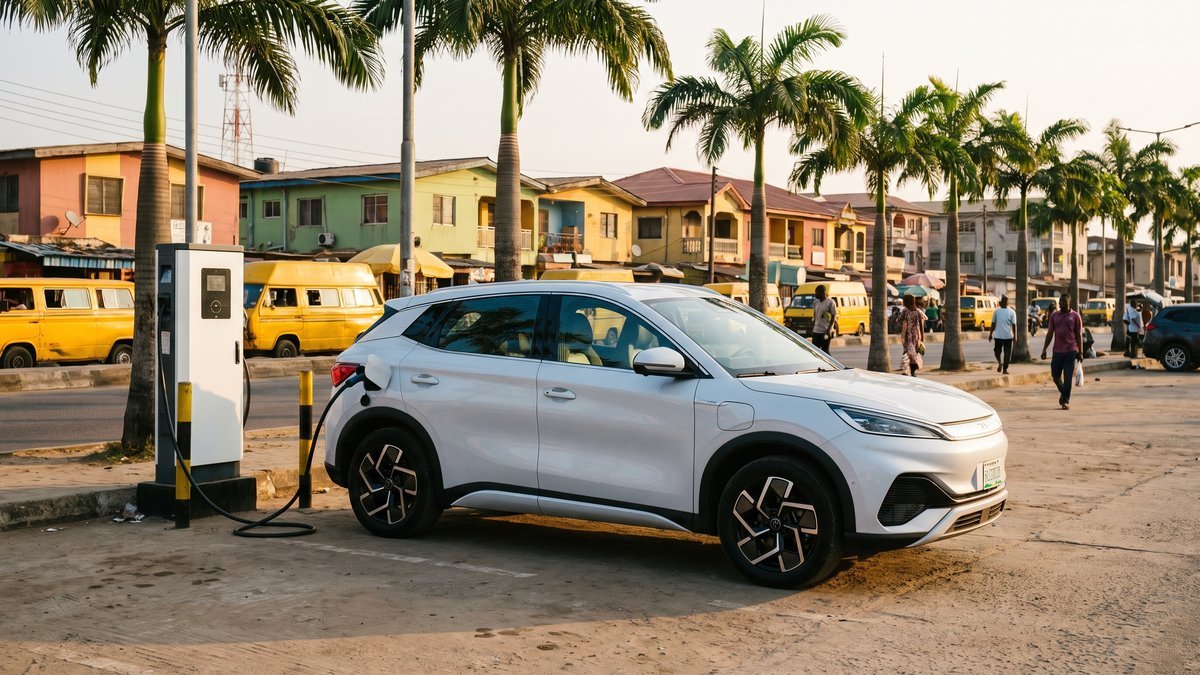
For years the argument against buying an electric car in Nigeria was simple arithmetic: the vehicle cost too much to land, and there was nowhere to charge it. One half of that argument has just been rewritten. The Federal Government has removed import duty and VAT on eligible electric vehicles, and the Nigeria Customs Service issued fresh operational guidelines in 2026 spelling out how the waiver works in practice.
With petrol sitting somewhere between ₦1,100 and ₦1,400 per litre across most states as of early September 2026, the running-cost gap between petrol and electric has never been wider. This guide breaks down exactly which vehicles qualify, which do not, the paperwork you need, what you will still pay at the port, and whether an EV actually makes financial sense on Nigerian roads right now.
What Changed: Zero Import Duty, Zero VAT
The waiver sits within the administration’s broader clean-energy transport push, alongside the CNG programme. Two separate reliefs are now in play for qualifying vehicles:
- Import duty removed. The 5% import duty that previously applied to electric vehicles has been eliminated.
- VAT exempted. According to the Nigeria Customs Service, eligible vehicles are exempt from value added tax as well — historically the larger of the two line items on most clearing invoices.
- Green tax exemption. Nigeria has introduced a levy targeting high-emission, fuel-guzzling vehicles. Electric vehicles are exempt from it, which widens the gap against big petrol SUVs a second time.
Stacked together, that is a meaningful reduction in landed cost. Industry commentary in Nigerian financial press has suggested the change could trigger a price war among EV dealers as the savings work through to showroom pricing — though how much of it dealers actually pass on to buyers is something the market will decide, not the policy.
Which Vehicles Actually Qualify — Read This Carefully
This is where most buyers will get caught out. The exemption is narrower than the headlines suggest.
Qualifies:
- Pure battery electric vehicles (BEVs) — fully electric, no petrol engine.
- Extended-range electric vehicles (EREVs) — but only those with a minimum electric-only range of 200 kilometres. Fall short of that number and you are outside the waiver.
Does not qualify:
- Hybrids of any kind — petrol-electric and diesel-electric models remain subject to full import duty and VAT. If you were eyeing a used hybrid as a cheap halfway step, this policy does nothing for you.
- Luxury vehicles valued at $100,000 or more — high-end battery-electric models are explicitly excluded, so the waiver is not a route to a cheap performance EV.
That 200km EREV threshold and the $100,000 ceiling are the two details worth confirming against the current customs circular before you commit money, because thresholds like these get revised.
The Paperwork: IDEC, SONCAP and Dealer Licensing
The waiver is not automatic. You do not simply arrive at the port with an electric car and walk away without paying. There is a documentation chain, and missing any link means your vehicle sits at the terminal accruing demurrage.
- Import Duty Exemption Certificate (IDEC). Importers must obtain an IDEC from the Ministry of Finance before accessing the incentive. This is the document that actually unlocks the waiver at customs. Start it early — it is not a same-week process.
- SONCAP certification. Every electric vehicle entering Nigeria needs a Product Certificate and a Shipment Certificate from the Standards Organisation of Nigeria. Without both, the vehicle will not clear, waiver or no waiver.
- Dealer licensing. Reporting on the new rules indicates that importing and selling EVs commercially requires a licence, with severe penalties — a fine reported at ₦500 million plus confiscation — for operating without one. If you are importing to resell rather than to drive, get formal legal advice on your licensing position first. This is the single most expensive detail to get wrong.
- Standard import documentation. Bill of lading, Form M, PAAR, proof of ownership and the usual clearing file still apply.
What You Will Still Pay at the Port
Duty and VAT going to zero does not mean clearing is free. Budget for:
- Shipping and marine insurance
- Port and terminal handling charges
- Clearing agent fees
- Demurrage if the vehicle overstays — the most avoidable cost on this list, and the one that most often ruins the maths
- Registration, plate number and vehicle licensing at state level
These charges vary by terminal, agent and vehicle size, and they move with the exchange rate. Get a written quote from your clearing agent before the vehicle ships rather than after it lands.
The Charging Question: Honest Assessment
Policy has moved faster than infrastructure. Charging in Nigeria is still clustered, overwhelmingly around Lagos and Abuja. Outside those two hubs, public charging is thin, and long-distance intercity driving in an EV requires genuine planning rather than optimism.
The trajectory is upward. Market forecasts project the Nigerian EV charging sector growing at a compound annual rate of roughly 27% through 2035. But a forecast is not a charger, and you cannot plug into a projection. The practical answer for most Nigerian EV owners today is home charging — and given grid reliability, that increasingly means solar plus battery storage, which is a real capital cost that belongs in your total-cost calculation.
The two-wheeler side is further ahead than the car side. Spiro, the electric motorcycle operator, has built out a battery-swapping network reported at over 100 stations concentrated in Lagos and Ogun, with stated plans to expand substantially. Swapping sidesteps the charging-time problem entirely, which is why electric adoption among commercial riders is outpacing adoption among car owners.
Does the Maths Actually Work?
The running-cost case is strong, and it is strongest for high-mileage users.
On the bike side the numbers are stark. Spiro has quoted a bike, battery and charger package at around ₦1.75 million, with energy costs of roughly ₦125 to cover 100km versus over ₦3,400 for the same distance on petrol. For a delivery rider or commercial okada operator covering serious daily distance, that differential compounds fast — the fuel saving alone can service the purchase.
For cars, the logic is the same but the entry cost is higher and the payback longer. Roughly, the calculation you should run is:
- Your monthly petrol spend at current pump prices, versus
- Your charging cost — realistically grid electricity plus generator or solar backup, not the idealised tariff
- Minus the extra capital the EV costs over a comparable petrol car after the waiver
- Plus lower maintenance — no oil changes, no filters, no exhaust system, far fewer moving parts
- Minus battery risk — the one genuinely large unknown, and the reason to care about warranty terms
If you drive 20–30km a day, the payback period is long and a fuel-efficient petrol car or a CNG conversion may serve you better. If you are covering 100km+ daily, the case flips sharply in favour of electric. Note too that the government’s CNG programme — which has converted over 100,000 vehicles and was formally expanded to cover EVs following a presidential directive in March 2026 — remains the cheaper conversion route for anyone who already owns a petrol vehicle.
Practical Advice Before You Buy
- Confirm the model qualifies in writing before paying a deposit — particularly the 200km rule if you are looking at an extended-range model.
- Ask about spare parts and trained technicians in your city. An EV that cannot be serviced locally is a very expensive ornament. This matters more than the spec sheet.
- Interrogate the battery warranty — duration, kilometre cap, degradation threshold, and crucially whether it is honoured in Nigeria or only in the country of origin.
- Price your charging setup up front, including inverter and solar if the grid in your area is unreliable.
- Check insurance before purchase. Some Nigerian insurers still price EVs cautiously or exclude battery damage. Get a quote first, not after.
- Use a clearing agent with actual EV experience. The IDEC and SONCAP chain is new enough that inexperience translates directly into demurrage.
Key Takeaways and FAQ
Are all electric cars now duty-free in Nigeria? No. Pure EVs and extended-range models with at least 200km of electric-only range qualify. Hybrids do not. Vehicles valued at $100,000 or more do not.
Do I still pay VAT? Eligible vehicles are exempt from VAT as well as import duty, per the Nigeria Customs Service. You still pay shipping, port charges, agent fees and registration.
What is IDEC and do I need one? The Import Duty Exemption Certificate from the Ministry of Finance is what activates the waiver. Yes — without it, expect to be assessed normally.
Can an individual import an EV, or only dealers? Commercial importation and resale requires proper licensing with heavy penalties for non-compliance. If you are importing for personal use, confirm your specific position with a licensed clearing agent or lawyer before shipping.
Is charging realistic outside Lagos and Abuja? Public charging is limited outside those hubs today. Home charging, ideally with solar backup, is the practical answer for most owners.
Bottom line: the duty and VAT waiver removes the single biggest barrier to EV ownership in Nigeria, but it rewards a specific kind of buyer — someone covering high daily mileage, based in or near Lagos or Abuja, able to charge at home, and buying a fully electric model that clears the eligibility rules. For everyone else, CNG conversion or a fuel-efficient petrol car still wins on pure economics for now. That balance is shifting, and it is shifting faster than it was twelve months ago.
Vehicle prices, import duties, exemption thresholds and specifications change frequently in Nigeria, and clearing costs move with the exchange rate. Always confirm current figures with the dealer, your clearing agent, or the official Nigeria Customs Service tariff before buying or shipping.